

Signs It’s Time to Replace Your Screening Media
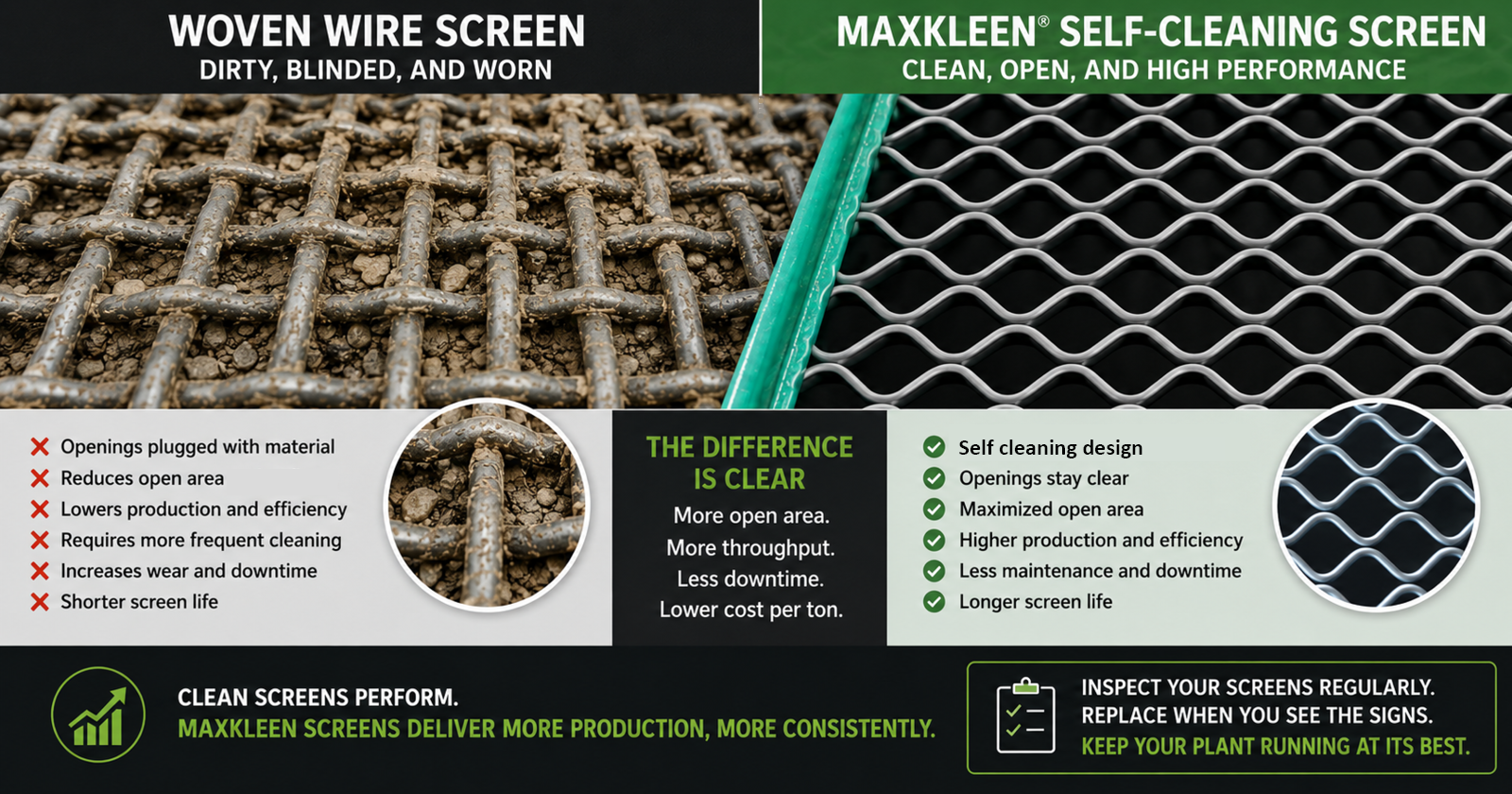
Many operators wait until screening media tears or breaks before replacing it. By that point, however, performance may already have been declining for weeks through reduced throughput, inconsistent sizing, or increased downtime for maintenance.
Recognizing the warning signs early can help maintain screening efficiency, prevent unexpected downtime, and keep production moving. Frequent replacement can also indicate that the current media is not the best fit for the application. In some operating conditions, switching from conventional woven wire to self-cleaning media may provide longer wear life while reducing blinding and pegging.
This article explores the key signs that it may be time to replace—or reconsider—your screening media. The earlier these issues are identified, the more opportunity you have to plan maintenance, avoid emergency shutdowns, and protect production.
Warning signs may appear first in production data, maintenance frequency, visible screen condition, or finished product quality.
Sign 1: Your Production Has Slowly Declined
A gradual decline in production can be difficult to notice from one shift to the next. Over time, however, worn or obstructed screening media can reduce the amount of material moving efficiently through the deck.
Possible warning signs include:
- Lower tons per hour
- Longer processing times
- Recirculating material or bottlenecks
- More frequent adjustments to maintain production
As screening media wears, openings may become distorted, damaged, or partially blocked by pegging and blinding. Material may no longer pass through the deck as efficiently, causing more material to remain on the screen or return through the circuit. The result can be lower throughput and additional strain on other parts of the operation.
Most plant operators know the level of production they can expect under normal conditions. If the plant is consistently falling short of that benchmark without an obvious change in feed material, moisture, or operating conditions, it may be worth inspecting the screening media for wear, damage, or blocked openings.
A small slowdown may not initially seem urgent, but even a modest loss in tons per hour can add up over days or weeks of production.
Sign 2: Material Is Blinding or Pegging More Frequently
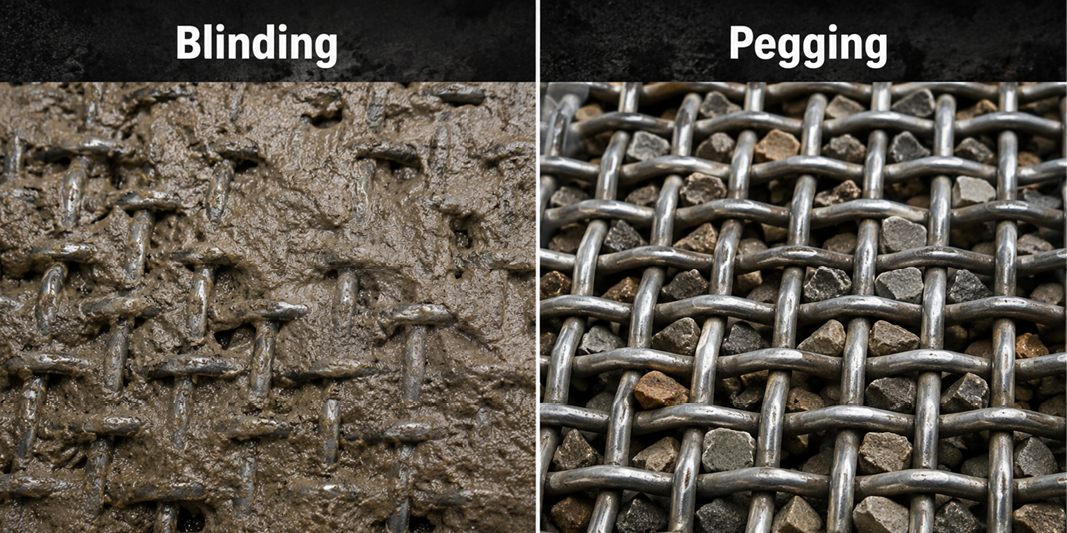
Blinding occurs when fine or damp material coats the screen surface and blocks the openings. Pegging happens when irregularly shaped particles become lodged in the apertures. Both problems reduce open area, restrict material flow, and can lower throughput.
Watch for signs such as:
- Material sticking to the screen surface
- Openings becoming plugged more frequently
- Increased cleaning or maintenance
- A noticeable decline in screening efficiency
These issues may become more common as screening media wears out, but operating conditions also matter. Wet, sticky, or unusually shaped material can overwhelm conventional woven wire even when the screen is still in usable condition.
If blinding or pegging has become a recurring problem, replacing the screen with the same type of media may only provide a temporary solution. In some applications, switching to self-cleaning media such as MAXKleen can help keep openings clear, particularly when processing damp material, while reducing cleaning time and unplanned shutdowns.
Sign 3: You’re Changing Screens More Often Than You Used To
Experienced operators usually know how long a screen should last under normal operating conditions. If you are replacing screens more frequently than expected, it may be a sign that the current media is not well matched to the application.
You may also notice:
- Shorter wear life
- Higher maintenance labor costs
- More frequent downtime
- Repeated failures in the same areas of the screen
Before ordering the same replacement again, consider whether the screen is too light for the material being processed. Heavy, abrasive feed can wear through undersized wire quickly, while wet, sticky, or corrosive material may require a different wire type or screen design.
As a general rule:
- Heavy or abrasive material: Premium music wire may provide the strength and wear resistance needed for the application.
- Wet, sticky, or corrosive material: Stainless steel wire may offer better corrosion resistance and longer service life.
Frequent replacement does not always mean the screen itself is defective. It can also point to improper tensioning, inadequate support, concentrated impact, changing feed conditions, or a media type that is no longer suited to the job.
If screen life continues to decline faster than expected, it may be worth reviewing the entire setup rather than treating each replacement as an isolated maintenance issue. Once you decide replacement is necessary, accurate measurements can help ensure the new screen fits properly and performs as intended.
Sign 4: Your Finished Product Is Out of Specification
Worn or damaged screening media can affect more than production speed—it can also compromise the quality of the finished product.
If you notice:
- Oversized particles in the product stream
- Inconsistent particle sizing
- Roots, debris, or other unwanted material passing through
- A higher percentage of off-spec material
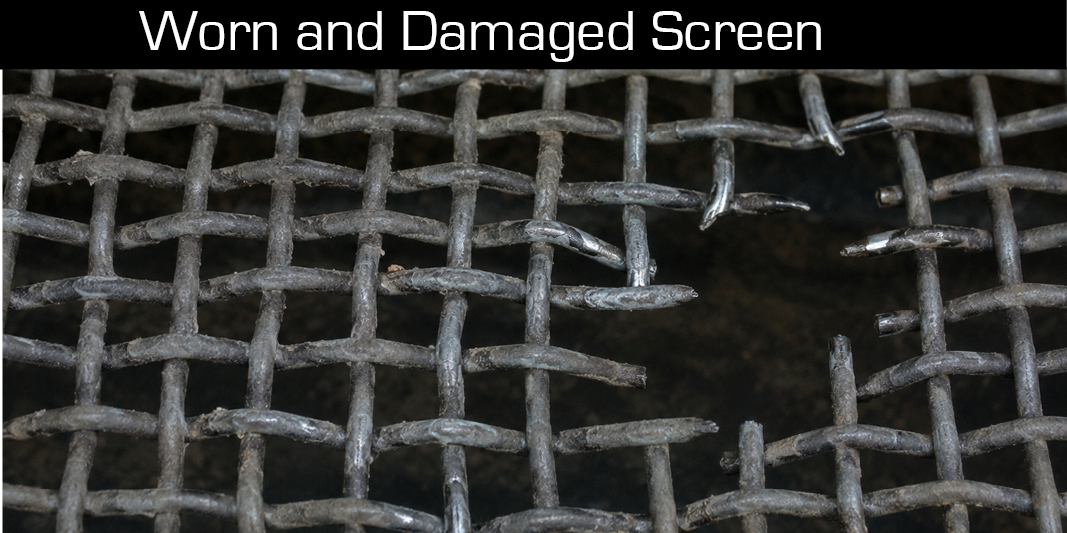
Inspect the screen for broken wires, torn sections, sagging, buckling, stretched openings, or other visible damage. These conditions can allow material to pass through openings that are larger or less uniform than intended.
If the finished product is no longer meeting specification, the screening media should be one of the first areas you inspect. Even relatively small areas of damage can affect separation accuracy and reduce product consistency.
Sign 5: Wire Is Worn Thin
As you inspect your media, pay special attention to the wire. Look for:
- Abrasion
- Flattened wires
- Stretched or broken wires
- Overall warping or stretching of the screen
Visible wear does not always mean immediate failure, but it does indicate that the screen should be monitored closely and replacement should be planned. It’s also worth noting that flattened or worn wire can affect screening accuracy and screen strength. Waiting until wires break or the screen tears can turn a routine changeout into an emergency repair. Scheduling replacement during a planned maintenance window helps protect production and reduces the risk of secondary damage.
Sign 6: You’re Scheduling More Unplanned Maintenance
If you’re shutting down your plant more often to clean or repair screens, your screening media may be nearing the end of its useful life.
It can be tempting to get every last bit of use from a screen, but delaying replacement can lead to much higher costs. A broken, blinded, or severely worn screen can force an emergency shutdown, resulting in lost production, unplanned maintenance, and labor costs while the plant is not running.
Regular inspections can help you identify wear before it becomes an emergency. Ordering replacement screens in advance allows you to schedule maintenance on your terms and avoid the greater expense of an unexpected shutdown.
Sign 7: You’re Measuring Purchase Price Instead of Cost Per Ton
Purchase price matters, but it does not tell you what a screen will ultimately cost your operation. Wear life, cleaning frequency, maintenance labor, downtime, throughput, and finished product quality all contribute to the true cost of screening media.
For a short-term or one-time job, the least expensive option may be entirely appropriate. For continuous production, however, a screen that lasts longer, remains open, and requires less maintenance may deliver a lower cost per ton even when its initial price is higher.
Rather than comparing screens only by purchase price, consider how each option affects total production over its useful life. A lower-priced screen that blinds frequently or wears prematurely may ultimately cost more through lost output, additional changeouts, and maintenance labor.
Should You Replace or Upgrade?
You know your operation better than anyone—the material you are processing, the specifications you need to meet, and the production levels required to remain profitable. Choosing the right screening media means balancing upfront cost, wear life, maintenance requirements, product quality, and throughput.
Woven wire, for example, typically costs less upfront than self-cleaning screening media. But the initial price does not always reflect the screen’s total operating cost. If woven wire wears prematurely or requires frequent cleaning, the resulting downtime and labor can quickly outweigh the initial savings.
Consider a midsize plant producing 150 tons per hour. A four- to eight-hour maintenance window could represent between 600 and 1,200 tons of lost production. When those shutdowns become more frequent, upgrading to screening media that offers longer wear life or reduces blinding may improve both uptime and cost per ton.
If the current media has delivered acceptable wear life, throughput, and product quality, a like-for-like replacement may still be the right choice. If the same performance problems keep returning, replacement time is also an opportunity to reconsider the media itself.
Estimate the Impact on Your Operation
For operations experiencing recurring blinding and cleaning downtime, the MAX Production Calculator can help estimate the potential production impact.
Conclusion
Replacing screening media is not simply about fixing a broken or worn screen. It is about protecting production, reducing unplanned downtime, maintaining product specifications, and improving the overall economics of your operation.
Regular inspections can help you identify warning signs before declining screen performance begins affecting throughput or profitability. Once you recognize that replacement is approaching, take the opportunity to consider why the media is wearing and whether a like-for-like replacement is still the best option.
Every operation has a sweet spot where screening performance, wear life, maintenance requirements, and cost are properly balanced. If your current media is wearing faster than expected or requiring frequent attention, a different screen type may provide better long-term value.
Need Help Evaluating Your Screening Media?
Not sure whether your screening media is due for replacement—or whether it is time to consider an upgrade?
Our team can evaluate your equipment, material, production goals, and current screen performance to help you select the right replacement screening media for your application. Contact a Samscreen screening media expert today.